Otium Mahjong: Wafū Tile Match
Solitaire Relax® - Solitaire Card GamesBoard
4.8103.00 Reviews
- Version
- 1.4.14
- Installs
- 100.00K
- Age Rating
- Everyone
Screenshots
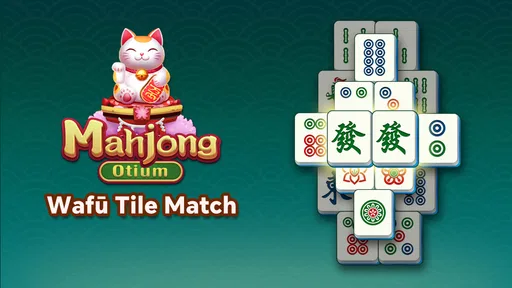
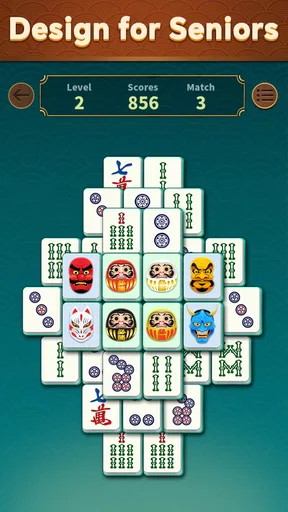
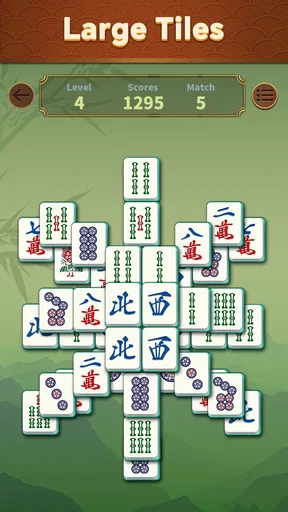
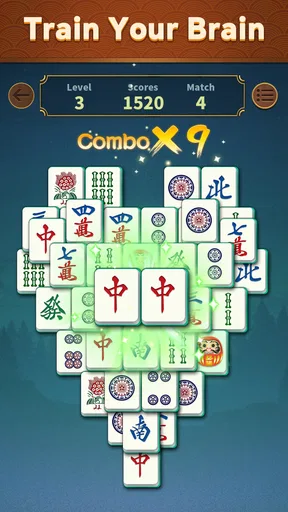
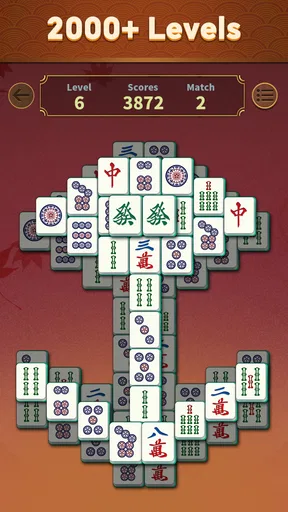
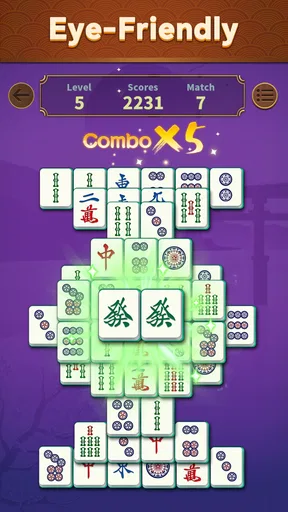

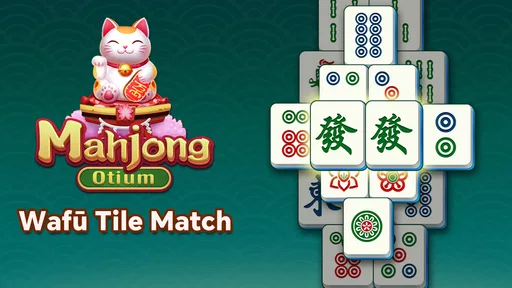
Our Review of Otium Mahjong: Wafū Tile Match
 Analysis by Appyee
I approached Otium Mahjong: Wafū Tile Match expecting a familiar tile-matching game with a calm presentation, and that is largely what it delivers. It belongs to the board-game side of mobile gaming, but it is designed less for competition than for short, quiet sessions. The basic appeal is easy to understand: find matching tiles, clear the layout, and enjoy a slower rhythm than you get from most action games.
That simplicity is both its strongest quality and its biggest test. A game like this can be pleasant within minutes, but it also has to offer enough variety and comfort to remain worth opening after the first burst of curiosity disappears. After spending time with it, my opinion is that it works best as a low-pressure routine rather than as a game I would play continuously for long stretches. If you want something gentle for a break, it makes sense. If you need deep strategy, competition, or a constantly changing challenge, you may outgrow it.
What the first week feels like
The opening experience is approachable because the central rule needs almost no explanation. You look for identical tiles and make matches, gradually reducing the arrangement in front of you. That makes the game suitable for players who do not want to learn a complicated system before enjoying themselves. I could imagine handing it to someone who rarely plays mobile games and seeing them understand the purpose almost immediately.
The Japanese-inspired presentation gives the familiar mahjong solitaire format a distinct personality. The title’s “Wafū” focus suggests a traditional Japanese visual direction, and that matters here because the atmosphere is a major part of the attraction. The game is not trying to overwhelm me with effects or a busy interface. Its identity comes from making the board feel more composed and decorative than a plain utility-style puzzle.
During the first few sessions, the most satisfying moment is not a dramatic reward but the gradual clearing of a crowded board. I tend to scan the exposed tiles, choose a pair, and then reassess what becomes available. That small loop creates a comfortable sense of order. It is especially effective when I want to occupy my hands for a few minutes without committing to a story, a match against another player, or a demanding puzzle campaign.
My practical advice is to avoid treating every move as an emergency. The game feels better when I pause briefly and inspect the board before tapping. Looking for pairs that expose covered tiles is generally more useful than clearing any convenient match. This is one of the first non-obvious strengths of the format: even though the controls are simple, a little attention changes the experience from random tapping into a light planning exercise.
It also helps to play in short sessions at the beginning. The calm design can make the game feel almost effortless, but repeated boards or similar patterns may become less distinctive if I play for too long. A ten-minute break lets the visual style and matching rhythm remain refreshing. A long uninterrupted session can reveal the limited nature of the core activity much sooner.
The game is free, which removes the biggest barrier to trying it. It is also rated for Everyone, so its general tone is accessible for a broad audience. The developer is Solitaire Relax® - Solitaire Card Games, a name that clearly fits the relaxed solitaire and card-game space, although this particular release applies that leisurely approach to tile matching.
Who gets the most from the opening sessions
I think the best early audience is someone who wants a quiet distraction while waiting for an appointment, winding down before sleep, or taking a short break from work. It can also suit players who enjoy traditional puzzle layouts but dislike timers, combat, or pressure from other people. The low learning curve means there is little friction between opening the game and starting a board.
It is less convincing for anyone looking for a competitive board game. There is no reason to approach it as a substitute for a multiplayer mahjong table or a strategy title with opponents and negotiation. The pleasure comes from arranging your own attention, not from outsmarting another player. That distinction is important because the word “mahjong” can create expectations that this is a full traditional mahjong experience. I would not choose it for that purpose.
Does it keep earning attention after the novelty?
The month-to-month question is more difficult than the first-week question. Familiar matching mechanics are easy to enjoy, but they are also easy to exhaust. For lasting value, I need the game to fit naturally into a routine. In my experience, this one is most useful when treated as a small mental reset: open it, complete a manageable amount of play, and leave before the repetition becomes noticeable.
That makes it a good companion for predictable daily moments. I could use it after lunch when I want to step away from a screen full of messages, or during a commute when I need something more engaging than scrolling but less demanding than a competitive game. The realistic trade-off is that it may become part of a habit without becoming a major hobby. That is not a failure; many successful relaxing games earn their place by being dependable rather than endlessly surprising.
One workflow I found useful is to separate “focus sessions” from “background sessions.” In a focus session, I actively inspect the board and try to preserve useful tile access. In a background session, I simply play at an easy pace while listening to something else. The first mode gives the puzzle more substance, while the second makes it function as a calming hand activity. Switching between those modes helps prevent the game from feeling like one unchanging task.
Another useful habit is to stop after a satisfying board rather than continuing automatically. Tile-matching games can encourage the “just one more” impulse, but that does not always improve the experience. If I finish a layout and immediately start another, the decorative presentation has less time to register and the repeated structure becomes more obvious. Ending on a clean completion makes it easier to return later with interest.
The current version is 1.4.14, and the game was released on Aug 19, 2025. Those details place it as a relatively recent entry rather than a long-established classic. I would therefore judge its long-term value by the quality of the everyday loop, not by assuming it has the depth or history of a mature puzzle series. Its audience will likely stay interested when the game fills a specific need: calm matching with an attractive Japanese-style identity.
The visible reception is encouraging. It holds a 4.8 average from around 805 ratings, with roughly 103 written reviews, and it has passed 100K+ installs. Those figures suggest that the straightforward concept is connecting with players, but they should not be mistaken for proof that every player will find endless variety. A high rating can reflect a strong first impression, and this game’s first impression is certainly one of its advantages.
What makes returning worthwhile
The recurring value comes from convenience and mood more than from a complex progression system. I can return without remembering a plot, rebuilding a character, or checking a competitive ranking. That makes it forgiving when I have not played for several days. The game asks me to look at the board and begin again, which is exactly the kind of low-maintenance interaction many people want from a casual puzzle.
There is also a modest cognitive benefit in the way the board rewards visual sorting. I am not claiming it transforms concentration, but matching tiles can encourage me to slow down, compare shapes, and think one or two moves ahead. The useful part is the transition from passive screen time to a small, bounded task. For a short break, that is more satisfying than endlessly refreshing a feed.
Still, I would not call the replay value unlimited. If you need a strong sense of mastery, you may prefer a logic game with increasingly complex rules, a traditional solitaire app with several variants, or a competitive mahjong title. Those alternatives offer more distinct forms of challenge. Otium Mahjong is better when consistency is a feature, not a weakness.
How much maintenance does it require?
From a player’s point of view, the maintenance burden is light. There is no elaborate collection to organize in the experience I reviewed, and the central activity can be understood each time I return. That makes it easier to keep installed for occasional use. I do not need to reserve a large block of time or maintain a complicated strategy between sessions.
The more important maintenance issue is personal: managing repetition. A relaxing tile game can quietly become background noise if I use it every time I have a spare minute. My solution is to give it a defined role. I use it when I want visual focus and a calm pace, but I switch to a different kind of game when I want novelty. This keeps the app from being judged for something it was never designed to provide.
Storage and device compatibility are also approachable. The minimum operating system is Android 6.0, which means the game is not restricted to only recent Android phones. That is useful for people keeping an older device as a spare or using hardware that does not run the newest software. I would still expect the smoothness of any mobile game to depend on the individual device, but the stated system requirement is broadly accessible.
Because it is free, the decision to keep it installed is easy to reverse. I can try it without treating the download as a commitment. The better question is whether it deserves a permanent place beside other puzzle games. For me, that depends on whether I regularly want this exact mood. If I already have several mahjong solitaire apps with similar layouts and presentation, this one needs to win through atmosphere and ease rather than through a radically different rule set.
A small maintenance tip is to keep the game associated with a particular routine instead of opening it indiscriminately. For example, using it during a short evening wind-down gives it a clear purpose. Using it every time I feel bored makes the boards blur together. That distinction may sound minor, but it is what separates a useful relaxing tool from another forgotten icon.
Where fatigue begins
The main source of fatigue is the narrowness of the central interaction. Finding pairs and clearing tiles is pleasant, but the basic action remains the same from one session to the next. Even a lovely visual theme cannot completely disguise that repetition. I noticed the limitation most when I played beyond the point where I was still making deliberate choices.
Another possible friction point is the gap between the calm promise and the player’s own expectations. “Relaxing” does not mean every board will feel effortless. If I focus on avoiding mistakes or clearing a layout as efficiently as possible, I can create pressure that the game itself may not be trying to impose. The best way to enjoy it is to accept a slower pace and treat the board as a small visual exercise rather than a performance test.
Players who want measurable improvement may also find the experience thin. A traditional solitaire game can offer different card variants, while a logic-puzzle collection can change the mental rules from one challenge to another. A full mahjong game can provide opponents, scoring, and a richer strategic framework. This title sits in a narrower lane: it is for matching tiles in a relaxed board setting, not for covering every interpretation of mahjong.
I would also skip it if my main reason for playing is social interaction. The appeal is personal and self-contained. There is no need to coordinate with friends, but there is also no shared table to make the sessions memorable. Someone who enjoys discussing moves, competing for scores, or learning a traditional ruleset will probably get more lasting value elsewhere.
For families, the Everyone rating makes the tone broadly suitable, but I would still present it as a quiet puzzle rather than an educational game. Its value for younger players is the simple matching loop and visual attention, not a formally structured learning program. For older players, the uncluttered concept may be more important than the theme itself, especially if they want something easy to pick up without mastering complicated controls.
How it compares with familiar alternatives
Compared with a standard mahjong solitaire app, this game’s advantage is its Japanese-style identity and deliberately restful feel. If the usual alternative looks functional or generic, this presentation can make the same basic activity feel more like a small ritual. The disadvantage is that players seeking a larger collection of modes may find a dedicated solitaire package more versatile.
Compared with ordinary card solitaire, the tile layouts provide a different kind of visual search. I find myself scanning clusters and thinking about access to covered pieces rather than building suits and ranks. That makes it a good alternative when card games have started to feel too familiar. However, card solitaire usually has a wider range of recognizable variants, so it may be the better long-term installation for someone who wants several rule sets in one place.
Compared with competitive mahjong, the distinction is even sharper. This is a solitary matching puzzle, not a replacement for learning the traditional game. I would recommend it to a friend who says, “I want the look and calm of tiles, but I do not want to study a full ruleset.” I would point a serious mahjong learner toward a dedicated traditional app instead.
Compared with fast casual games, it wins on low pressure and loses on immediate excitement. There are no reflexes to test and no frantic decisions to make. That is precisely why it works during a quiet break, but it also means it will not satisfy someone who wants constant stimulation. Choosing it is really a choice about pace.
My long-term verdict
I think Otium Mahjong: Wafū Tile Match earns a place on an Android phone when the player values atmosphere, simplicity, and repeatable short sessions. Its free availability, Everyone rating, accessible system requirement, and strong early reception make it easy to recommend as a trial. More importantly, the game understands that a tile puzzle does not need to be loud to be engaging.
My recommendation comes with a clear condition: keep it for the role it performs well. Use it as a calm visual break, a gentle evening activity, or a way to replace aimless scrolling with a small task. Do not expect a full traditional mahjong experience, a deep competitive system, or limitless novelty. Those expectations would make the game seem smaller than it needs to be.
The lasting question is whether its presentation remains pleasant after the first week. For me, it can, provided I play in moderation and make deliberate choices instead of tapping through boards mechanically. The game’s recurring value is not in surprising me every day; it is in being reliably available when I want a quiet matching session.
I would recommend it to casual puzzle fans, people who enjoy solitaire-style layouts, and anyone looking for a low-pressure game that can be understood immediately. I would skip it in favor of a deeper alternative if I wanted multiplayer competition, several radically different modes, or a demanding mastery curve. As a focused relaxing board game, though, it succeeds because it stays focused. The real strength is its ability to turn a few spare minutes into a calm, contained routine without demanding much maintenance from the player.
Verdict
Strengths of Otium Mahjong: Wafū Tile Match
- Relaxing Japanese-inspired visuals and atmosphere.
- Simple tile-matching rules make it easy to pick up.
- Short sessions fit well into quick breaks.
- Offline play is useful when you have no connection.
- Gradual difficulty provides a satisfying sense of progress.
Limitations of Otium Mahjong: Wafū Tile Match
- Some levels may feel repetitive after extended play.
- Hints or boosters may be limited without watching ads.
- Small tile details can be harder to distinguish on phones.
- Difficulty spikes may make later boards frustrating.
- Ads can interrupt the otherwise calm gameplay experience.
Other Releases by Solitaire Relax® - Solitaire Card Games
View All
Similar Picks in This Category
View All
Ludo King®
Gametion4.1

Ludo
Yarsa Games4.6

Tile Master® - Matching Game
Higgs Studio3.6

Checkers Online
CC Games4.6

Dominoes
Loop Games4.7

Chess
Chess Prince4.6
Frequently Asked Questions
What is Otium Mahjong: Wafū Tile Match?
Otium Mahjong: Wafū Tile Match is a relaxing tile-matching puzzle game inspired by traditional Japanese aesthetics. Instead of playing competitive mahjong with opponents, you clear the board by finding and pairing identical tiles. Its calm presentation, decorative themes, and gradually increasing layouts make it suitable for short sessions, casual play, or anyone who enjoys concentration-based puzzles without complicated controls.
How do you play Otium Mahjong: Wafū Tile Match?
The basic gameplay is easy to understand: tap two matching tiles to remove them from the board. However, not every tile is immediately available, so you must plan your moves and uncover blocked pieces carefully. Completing the board requires attention, pattern recognition, and sometimes using available hints or shuffle options when the remaining combinations become difficult to identify.
Is Otium Mahjong: Wafū Tile Match free to download and play?
The game can generally be downloaded without an upfront purchase, but the exact monetization may depend on the Android or iOS version available in your region. Players may encounter advertising, optional in-app purchases, or limits connected with hints and other assistance features. Before installing, check the store listing for current pricing, ads, supported purchases, and any age or regional restrictions.
Does the game require an internet connection?
Many tile-matching sessions may be playable offline after the game has been installed, which is convenient for travel or moments without reliable mobile data. Nevertheless, some features can depend on an internet connection, including advertisements, cloud-related services, updates, event content, or purchase verification. It is best to launch the game once while online and review its behavior before relying on offline access.
Is Otium Mahjong: Wafū Tile Match suitable for beginners?
Yes. Otium Mahjong: Wafū Tile Match is designed around straightforward matching mechanics, so new players can begin without learning traditional mahjong rules or complicated strategies. The main challenge comes from recognizing available pairs and choosing an efficient order. Later boards may require more careful planning, but the relaxed pace and optional assistance can make the experience approachable for casual players.
Play our best games!


